
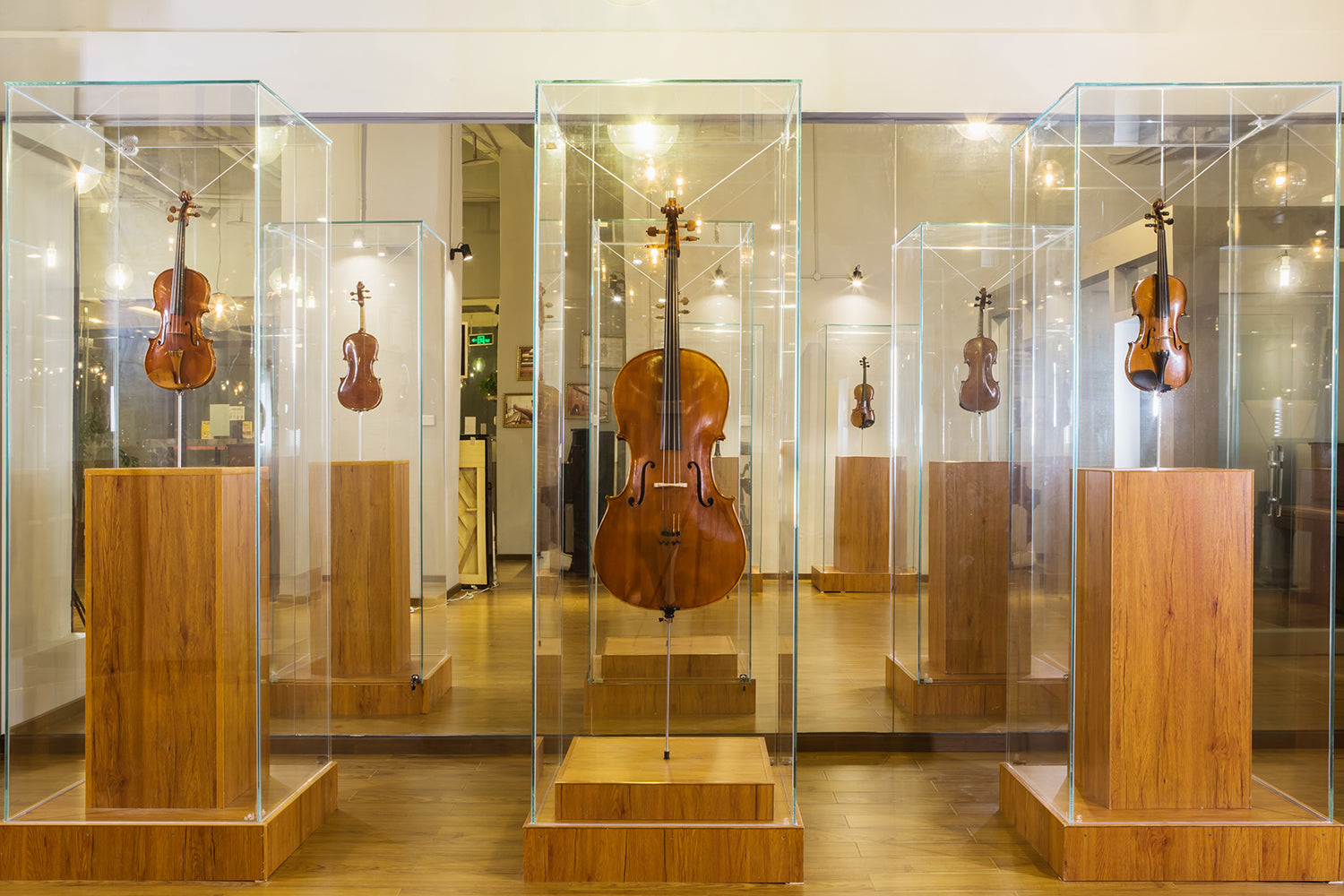
IUEStings Hosts Summer Master Violin Exhibition: 16th-Century Amati Violin Makes Its China Debut
The violin, born in the early 16th century, is one of the most iconic and emotionally powerful instruments in music history, with nearly 500 years of heritage. Though it originated in Europe, music transcends borders, serving as a universal language connecting people across cultures. As a carrier of Western artistic heritage, the violin has played a crucial role in global cultural exchange—from the gentle jingling of camel bells along the ancient Silk Road to the resounding whistles of China-Europe freight trains passing through Chongqing’s Tuanjie Bay, music and cultural dialogue continue to bridge East and West.


From May 1 to 3, 2023, the IUEStings Master Violin Exhibition, held at Longhu U City in Chongqing University Town, presented a grand musical feast celebrating the violin. The event welcomed distinguished domestic and international performers, as well as passionate music enthusiasts. The exhibition showcased a remarkable collection of antique violins from the 16th and 17th centuries, crafted in Italy, France, and other European countries. The crown jewel of the exhibition was a well-preserved 16th-century violin by the legendary Amati brothers of Cremona, Italy, valued at approximately 12 million RMB, marking its first-ever public appearance in China.


Violin making and performance originated in mid-16th century Italy, flourishing in the northern Italian town of Cremona. The Cremona violin tradition was founded by Andrea Amati, whose early works established the defining characteristics of Cremona violins. During the next 200 years—the golden age of Cremona violin making—master luthiers made only subtle refinements to Andrea Amati’s original designs. His exceptionally talented sons, Antonio and Girolamo Amati, inherited their father’s craft and upheld the highest standards of violin making, producing instruments that continue to enchant musicians and audiences centuries later.
The exhibition was further enhanced by a celebration of international wine culture, creating a rich, multisensory experience for attendees. The audience was treated to extraordinary live performances by four symphony orchestra musicians, Mr. Rochko, a renowned violinist from Belarus, and Mr. Wang Zheou, a young pianist trained in Europe. Together, they delivered a uniquely memorable musical journey, performing exquisite works that showcased the unparalleled beauty and resonance of these historic violins.

This landmark event not only promoted violin culture in Chongqing but also created an inspiring environment for the city’s artistic development. By bringing citizens closer to classical music and rare historical instruments, it strengthened public engagement with the arts and highlighted the enduring significance of high culture in contemporary society.